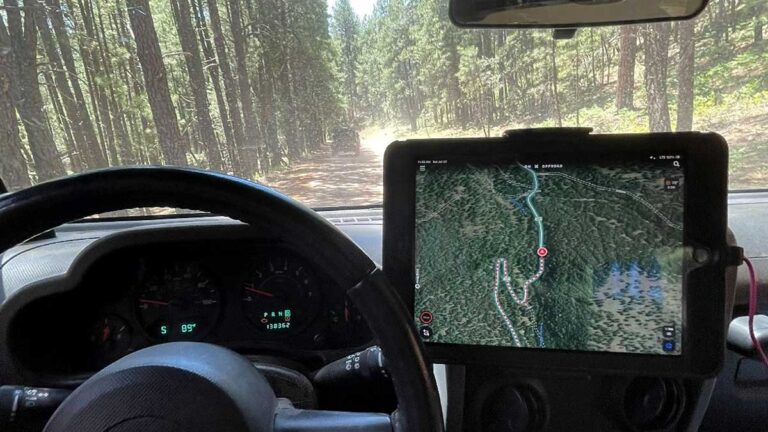
Beyond the Dot: Ground Truth
Navigators must understand the landscape itself and determine whether the path shown on a screen truly reflects what exists on the ground…
As Week Three of the 2026 Nomad Rally came to a close, the competition reached a pivotal turning point. The excitement of the starting weeks has given way to the realities of expedition travel. Teams are no longer simply covering miles—they’re navigating unpredictable mountain weather, solving complex analog navigation challenges, practicing responsible land stewardship, and adapting to constantly changing terrain. With each passing week, some routes grow more demanding and the objectives become more strategic. Week Three proved once again that success in the Nomad Rally isn’t defined by lockers and lift kits — it’s earned through careful planning, sound decision-making, resilience, and respect for the landscapes that make this adventure possible.
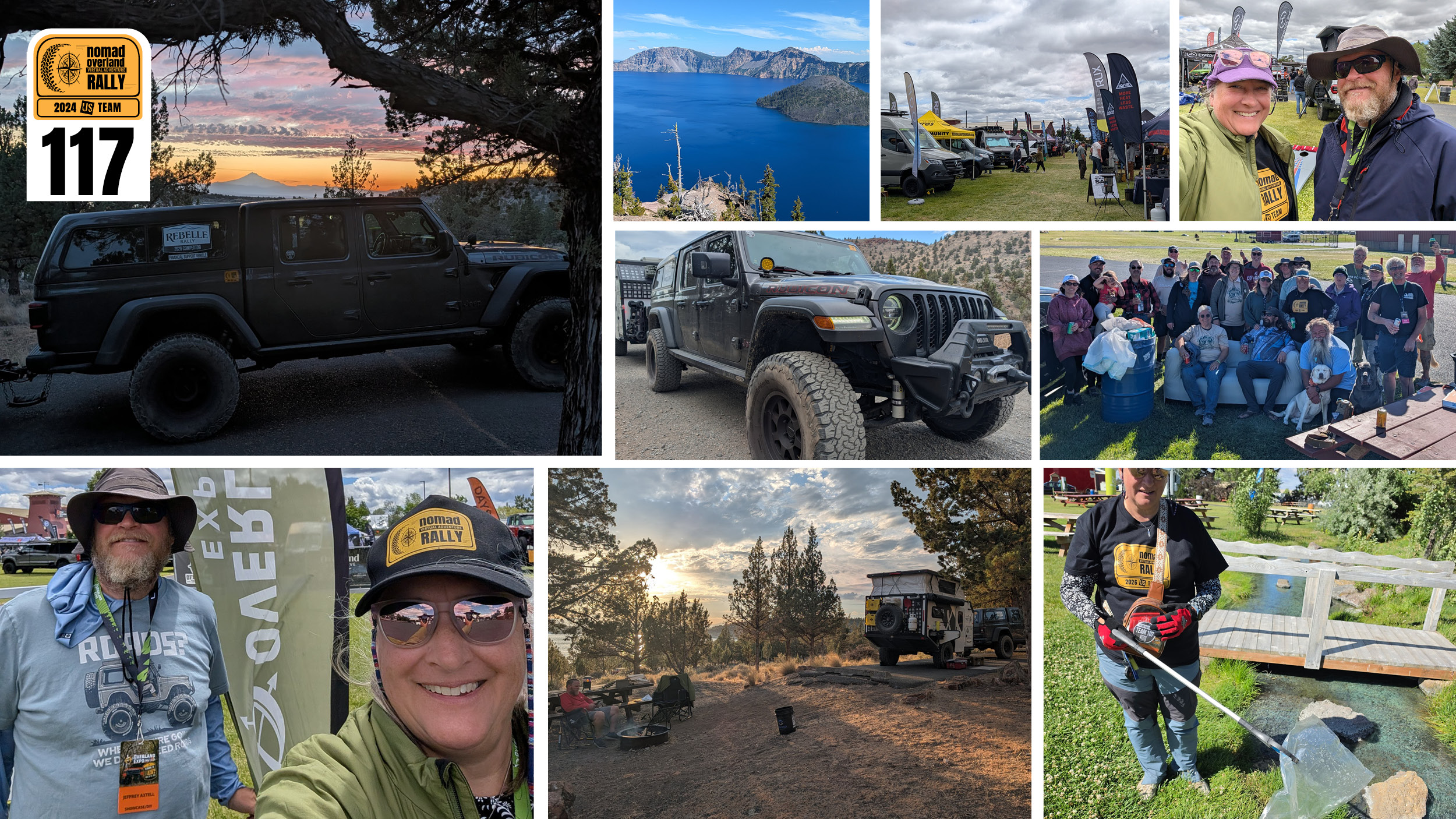
For the third consecutive week, Team 117 Lucas remained firmly atop the leaderboard. Lisa and Jeff have now completed the maximum twelve Overland Stages, accumulating an impressive 3,943 points. Their consistency has established an early benchmark for the rest of the field, but with challengers beginning to close the gap, there is little room to relax. Aware that every point counts, the Team combined demanding backcountry travel, public land stewardship, technical navigation, and community engagement into a remarkably balanced week. Their final Overland Stages carried them nearly 300 miles from the Pacific coast into the volcanic landscapes of central Oregon. Beginning in Gold Beach, they climbed inland through forests, scenic byways, and remote Forest Service roads before finishing near Crater Lake National Park. Their final stage of the week continued through the park before ending at Haystack Reservoir Campground.
Along the way, the landscape told its own story. Ancient lava flows and vast basalt fields surrounding Newberry National Volcanic Monument served as reminders that the terrain beneath their tires was shaped by thousands of years of volcanic activity. At Crater Lake National Park, Lisa and Jeff were reminded how unpredictable mountain travel can be. Despite arriving at the end of June, lingering winter snowpack still kept portions of Crater Lake’s famous Rim Road and several scenic overlooks closed.
After leaving Crater Lake, Lisa and Jeff headed to Overland Expo Pacific Northwest in Redmond, Oregon where they were part of the event’s DIY Showcase. They spent much of the weekend sharing ideas on expedition vehicle design, logistics, and responsible overland travel with thousands of attendees. But Mother Nature did not make it easy for them. “It was soooo cold this year, and the wind was relentless,” Lisa recalled. Still, the event was a fun time filled with friends and learning opportunities. “We connected with several Rebelles and a couple ladies from the Ladies Offroad Network and talked to lots of interesting people,” she continued.
When the expo concluded, Team 117 stayed behind for one more mission. Partnering with the Overland Expo Foundation, they participated in a large-scale cleanup of the event grounds, collecting more than twenty bags of trash while removing countless zip ties, stickers, and other micro-debris that often goes unnoticed. “Cleanup of the event venue after most of the vendors have left,” Lisa explained. “We were mostly picking up small things like zip ties, stickers, and small pieces of trash. The strangest thing found this year was a set of teeth; like for a costume!”
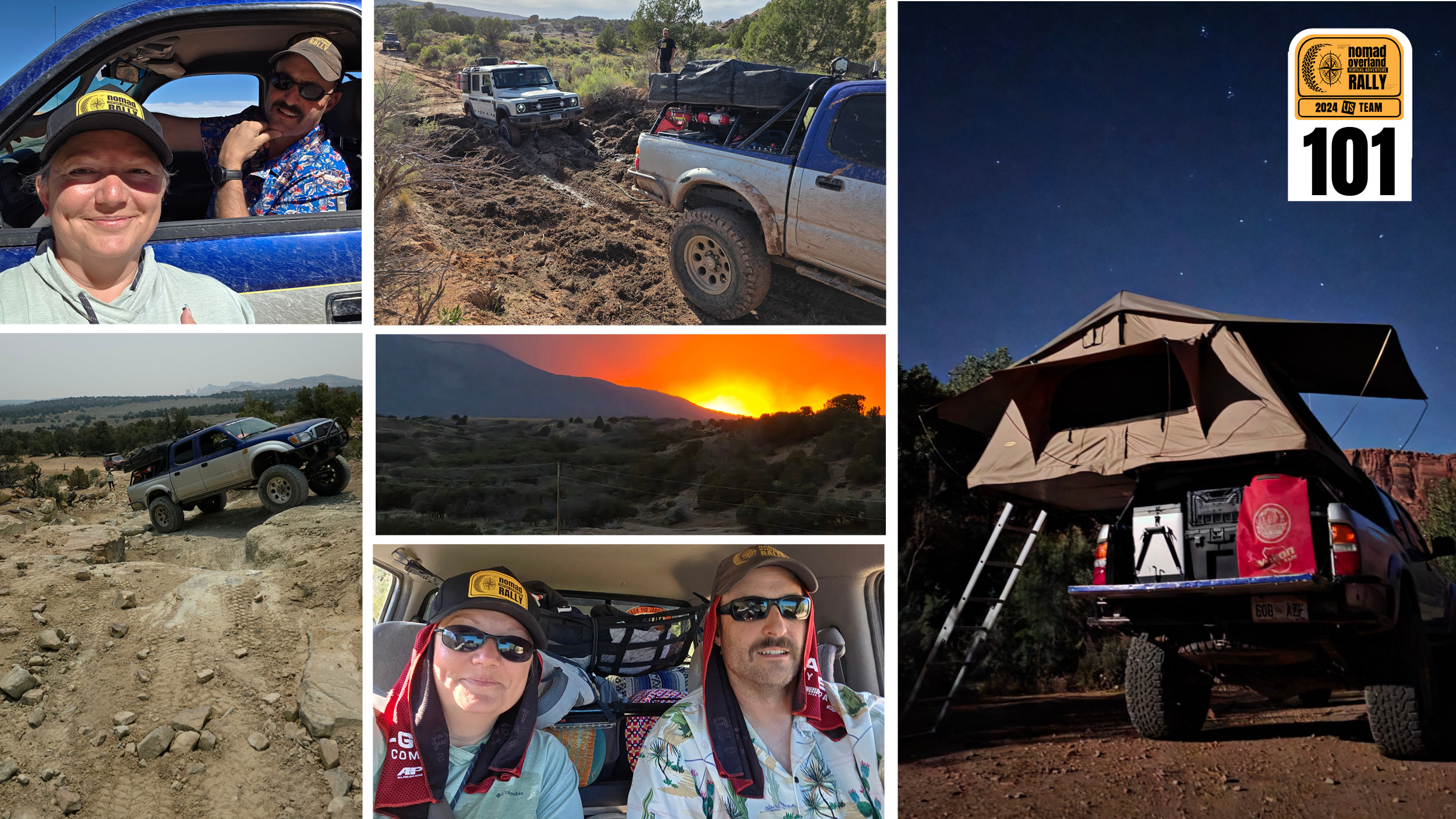
Holding firmly in second place, Team 101 Mercer turned in their most aggressive week of the Rally so far. Surging past the 2,000-point mark to reach 2,190 points, the Mercers spent Week Three linking together many of Utah’s most iconic overland routes in a relentless multi-stage expedition that showcased both endurance and strategic planning. Their week began on the legendary Kokopelli Trail, where deep desert sand demanded careful driving and thoughtful vehicle preparation. To maximize flotation and traction, the team aired their tires down to just 15 PSI before tackling the route and successfully completing their Driving on Sand activity.
From there, the pace only accelerated. Over the next six stages, the Mercers crossed an incredible variety of terrain, including the San Rafael Swell, Goblin Valley, Hell’s Backbone Road, Burr Trail, Hole-in-the-Rock Road, Capitol Reef National Park, and the rugged backcountry surrounding Moab.
Each stage presented its own unique challenges. Slickrock ledges, endless washboard roads, deep sand, alpine forests, dramatic canyon overlooks, and exposed ridge-top routes demanded constant adaptation and careful route planning. One highlight came along Hell’s Backbone Road, where the team followed the Great Western Trail onto one of Utah’s most spectacular ridge-line drives. Towering cliffs and expansive views rewarded the climb before the route descended toward Escalante.
Later in the week, they continued south along the historic Hole-in-the-Rock Road before connecting with the Burr Trail and the remote Notom-Bullfrog corridor, eventually reaching the isolated Halls Creek Overlook on the eastern edge of Capitol Reef National Park. Their final stages carried them back toward Moab, where they explored technical dirt roads near Willow Springs and the Eye of the Whale Trail before concluding an extraordinary eight-stage run across some of the American Southwest’s most celebrated public lands.
Few teams covered as much ground—or as many iconic destinations—in a single week. The result was a massive jump in points and a clear reminder that the race for the top spot is far from over — the Mercers have firmly established themselves as one of the Rally’s strongest contenders heading into Week Four.
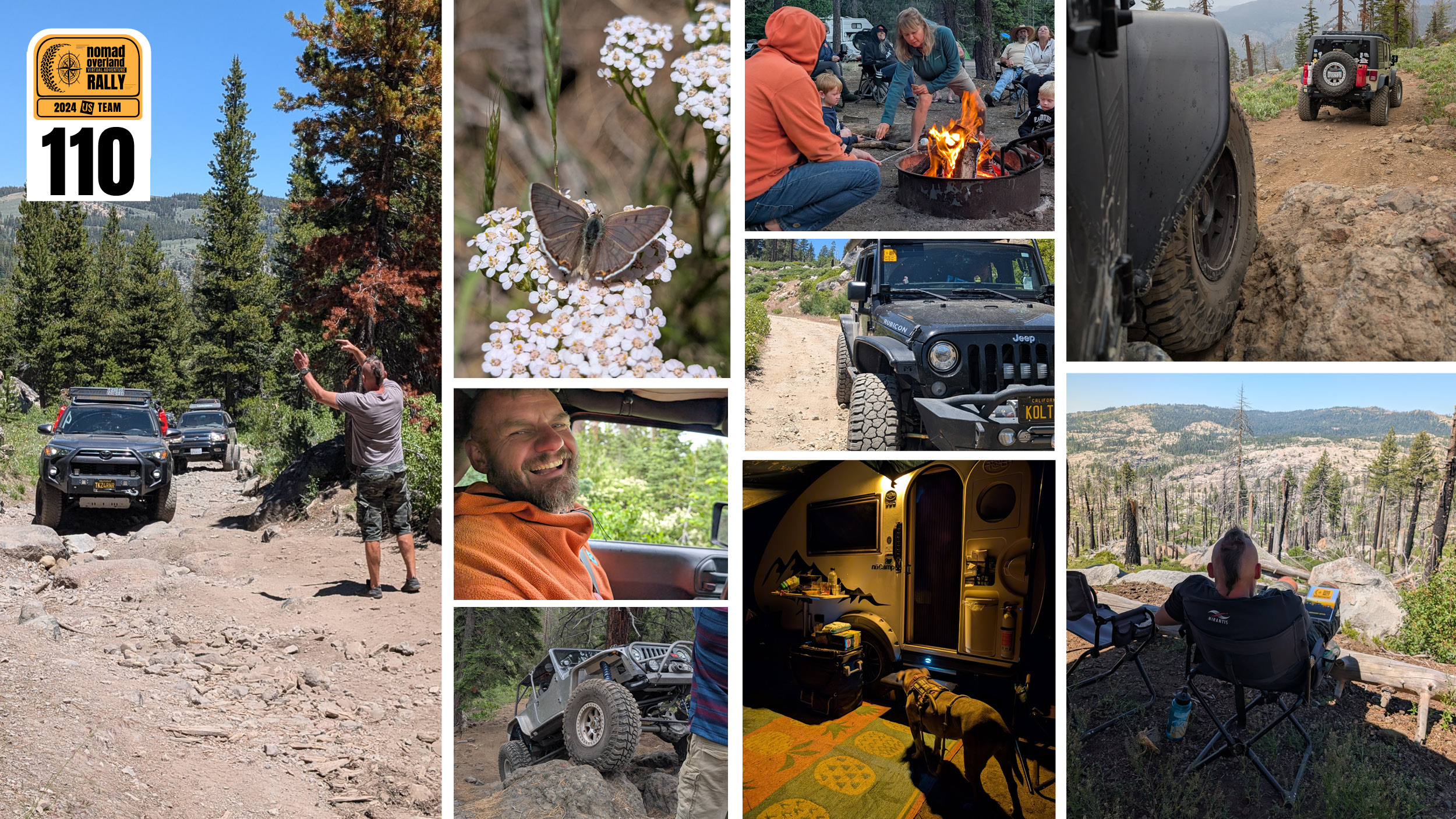
The biggest move during Week Three belonged to Team 110 Smigiel. After an impressive start in California, Dariusz and Aga continued to build momentum with a calculated push into the Sierra Nevada, climbing into third place with 1,169 points. Their steady rise demonstrates a disciplined strategy of building consistently week after week.
Week Three offered a dramatic shift in scenery for the Smigiels. Leaving the coastal fog behind, the team headed east toward California’s alpine backcountry, climbing into the woodlands of the Stanislaus National Forest. Their fourth Overland Stage carried them from Santa Cruz into the mountains, where they established camp at Sand Flat Campground along the Middle Fork of the Stanislaus River. The following day, they continued their ascent, tackling the rugged climb to Leavitt Lake, a stunning glacial alpine lake sitting at more than 9,500 feet above sea level.
High-elevation travel always presents unique challenges. Loose shale, narrow shelf roads, rapidly changing weather, and thinner air all place greater demands on both driver and vehicle. For Team 110, however, the rewards proved well worth the effort. While climbing through the subalpine meadows, they successfully completed one of the Rally’s wildlife objectives with a memorable elk sighting before continuing toward the shoreline of Leavitt Lake.
“Alpine lake,” the team shared simply, accompanying a spectacular photograph of their vehicle framed by lingering snowbanks and crystal-clear mountain water. Sometimes a picture says everything.
By combining technical mountain driving with careful route execution and multiple activity completions, Team 110 delivered one of the week’s most efficient point-earning campaigns. Their rapid climb up the standings is proof that disciplined planning can quickly turn a strong start into a serious championship challenge.
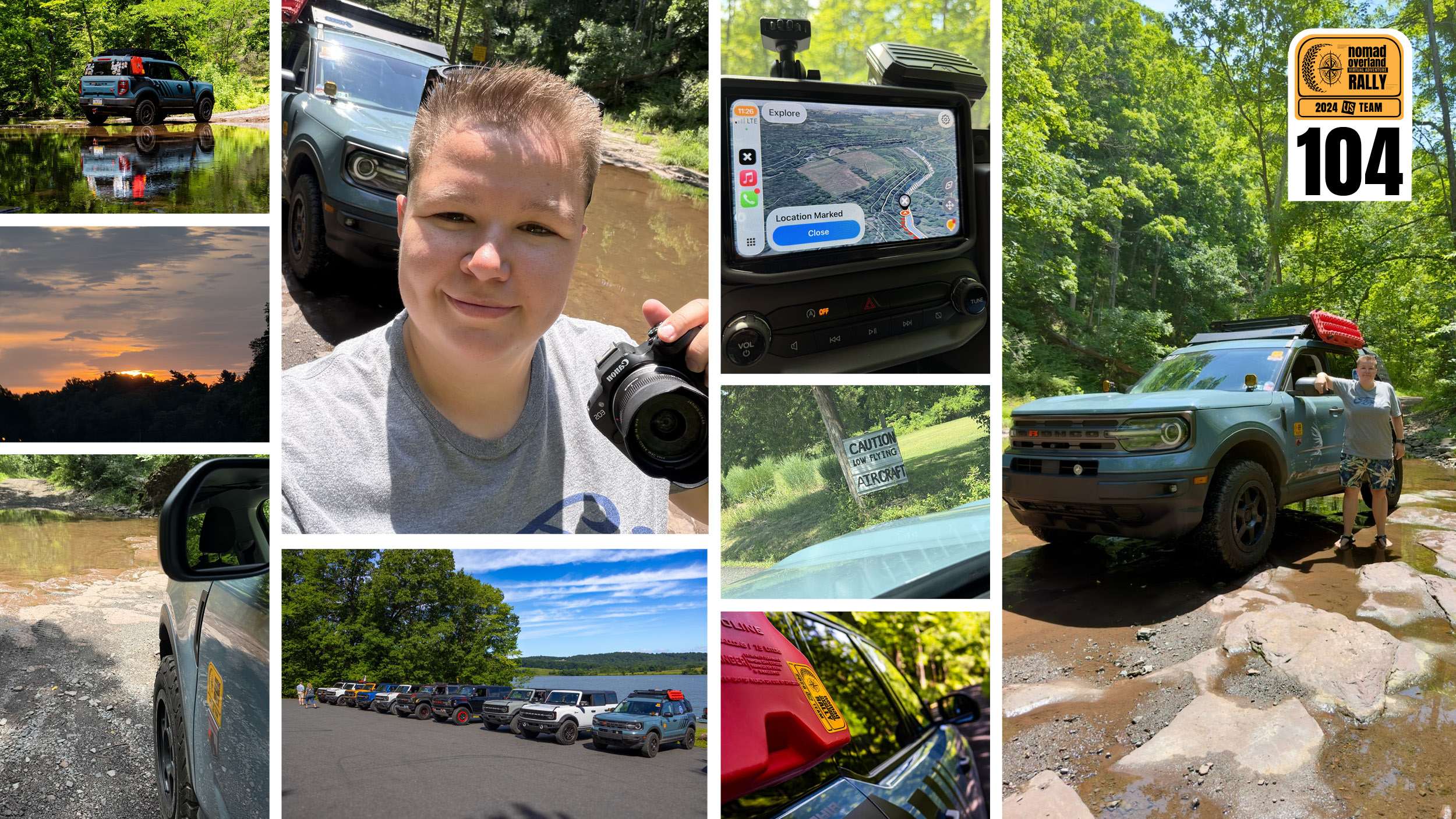
While many teams spent Week Three chasing miles across expansive landscapes, Team 104 Cooper focused on something equally important—pre-running trails for upcoming events so that others can enjoy a safe offroad experience. Jenna used her first Overland Stage this week to scout routes for the Quad State Broncos event where she was slated to be one of the Trail Guides.
Beginning in Lancaster County, Pennsylvania, she set up camp, then headed into the Middle Creek Wildlife Management Area to evaluate the trail conditions. Jenna was looking to identify potential hazards, and ensure the planned routes was ready for a safe and enjoyable club run.
Jenna was able to check off some of the OnX Offroad activities while she was pre-running. She used the app’s features to carefully note route conditions and mark potential hazards including warnings for nearby aircraft activity, private property boundaries, gate closures, major and minor water crossings, and other important trail information. These notes may seem small, but they’re exactly the kind of real-world information that improves safety and helps preserve responsible access to public lands.
While exploring the area’s peaceful forests and wetlands, she was also able to complete some key wildlife PhotoQuests, noting, “No trail ride is complete without spotting some wildlife!”
After a successful event, Team 104 Cooper turned to eastern Pennsylvania, to explore the scenic Tinicum Loop through Upper Bucks County. The route wound along historic dirt roads beneath a dense forest canopy before reaching its defining obstacle: the twin crossings of Rapp Creek along Bunker Hill Road.
Summer thunderstorms can quickly transform these crossings from routine to hazardous, making careful evaluation essential. Before entering the water, Jenna confirmed the creek’s depth, assessed the rocky streambed, engaged low range, and completed both crossings without incident.
By blending digital navigation, trail evaluation, and community leadership, Team 104 Cooper logged a solid Week Three performance, and is poised to climb up in the rankings in weeks to come.
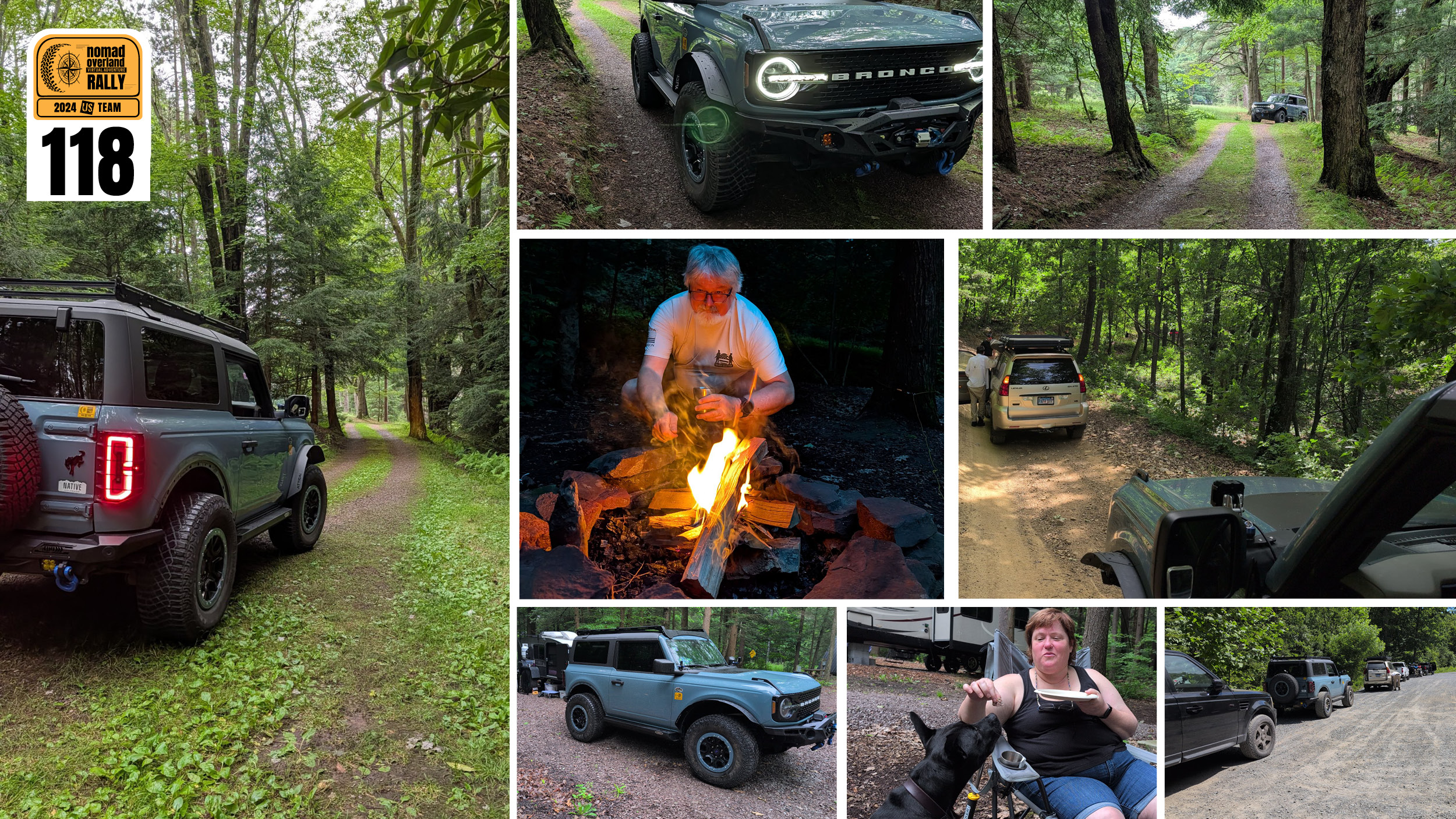
Team 118 Renzelman, based in Parkville, Maryland, turned in one of the Rally’s most methodical and well-rounded Week Three performances. Driving their Ford Bronco, “Tiberius,” Micheal and Christine Renzelman combined technical trail driving, expedition campcraft, and organized scouting into a highly productive multi-stage segment stretching across Virginia and western Maryland.
Their adventures began with a drive into Virginia’s George Washington and Jefferson National Forests for a group run along the rocky terrain of Peter’s Mill Run, where they joined members of the Core 4×4 Club for the day’s fun.
The outing quickly became a reminder that overlanding is as much about teamwork as it is about reaching a destination, when only thirty minutes into the run, another participant experienced a significant cooling system failure. Rather than pressing ahead, the group stopped to assist, ensuring the disabled vehicle could safely exit the trail before continuing. It’s exactly the kind of trail etiquette and mutual support that defines responsible overland travel.
With the recovery complete, the group continued through Peter’s Mill Run before enjoying an informal trailside meetup with members of the Virginia Bronco Club.
For their next Stage, the Renzelmans headed west again—this time toward the rugged forests of Garrett County, Maryland. Climbing through the rocky Meadow Mountain ORV Trail, Michael and Christine established camp at Sleepy Hollow within Savage River State Forest at an elevation of 2,560 feet. The team made a nice hardwood campfire and prepared bratwurst for dinner. “Food cooked over a fire always tastes better!” Michael noted.
The following morning, the Renzelmans headed out to scout trails throughout Deep Creek Lake State Park. The objective was to evaluate roads, campsites, water crossings, and trail infrastructure for future club outings.
For Team 118, Week Three wasn’t about dramatic moments—it was about doing everything well. From supporting fellow travelers and refining future expedition routes to enjoying a quiet evening around a campfire, they demonstrated the steady, disciplined approach that consistently earns points throughout a ten-week Rally.
Three weeks into the 2026 Nomad Rally, one thing has become abundantly clear: every team is finding its own path to success. Some are covering enormous distances across multiple states, stitching together legendary overland routes into carefully planned multi-stage campaigns. Others are maximizing points through precision navigation, wildlife observation, stewardship projects, or detailed trail scouting that will benefit the broader off-road community long after the Rally concludes. There is no single formula for climbing the leaderboard—only smart decisions, thoughtful preparation, and the ability to adapt to whatever the trail delivers.
The front of the field is beginning to take shape, but the competition is anything but settled. Team 117 continues to set the pace with remarkable consistency, while Teams 101 and 110 have shown just how quickly a well-executed week can tighten the race. Behind them, teams throughout the standings are building momentum, refining their strategies, and proving that every checkpoint, every activity, and every stage can make a meaningful difference over the course of a ten-week rally.
What has been equally impressive is the spirit in which the Rally continues to unfold. Throughout Week Three, competitors didn’t simply chase points. They cleaned up public spaces after major events, documented trail hazards for future travelers, assisted fellow off-roaders with mechanical problems, practiced traditional navigation skills, and shared their knowledge with the larger overlanding community. Those moments don’t always generate the biggest scores, but they represent the values at the heart of the Nomad Rally: exploration, self-reliance, stewardship, and community.
With seven weeks still to go, the leaderboard remains wide open. Every mountain pass crossed, every forest road explored, every camp established, and every challenge completed has the potential to reshape the standings. The adventure is far from over, and if Week Three is any indication, the best stories of the 2026 Nomad Rally are still waiting somewhere beyond the next bend in the trail.
Navigators must understand the landscape itself and determine whether the path shown on a screen truly reflects what exists on the ground…
As Week Two of the 2026 Nomad Rally unfolded, the true scale of this multi-state adventure came into focus…
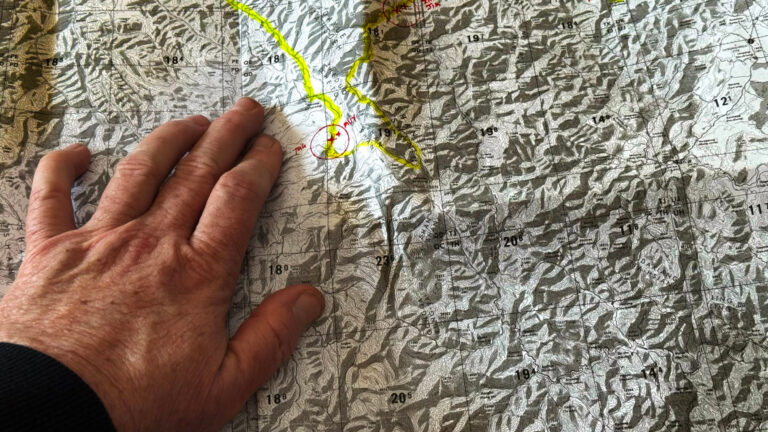
Paper maps may seem old-school in today’s world of GPS navigation, but understanding how to read a topographic map remains one of the most valuable skills an overlander can develop…

with