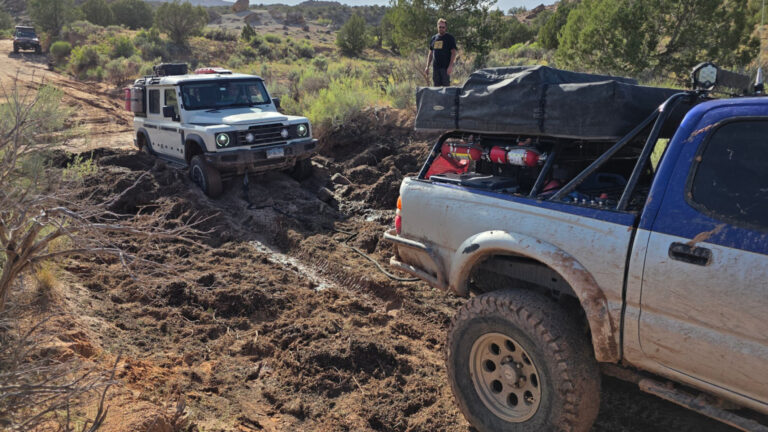
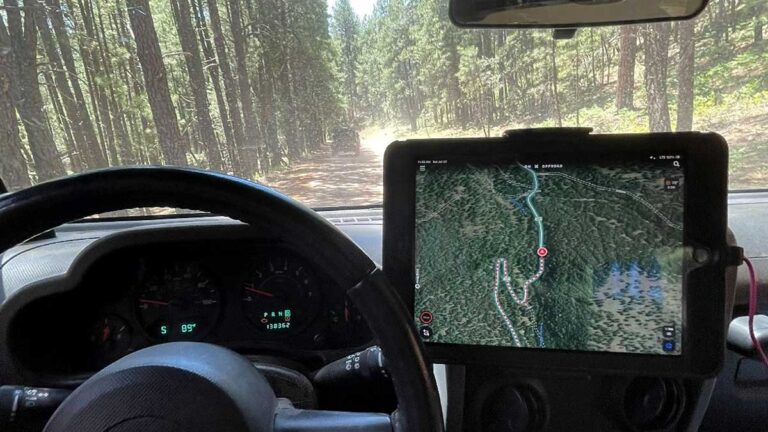
Backcountry access isn’t a guarantee—it’s a privilege. Nomad Teams map their ethics before they ever shift into 4-Lo.
As an overland journey pushes deeper into remote public lands and pristine wilderness corridors, a team’s impact on the environment becomes a direct reflection of their professionalism. True backcountry mastery isn’t just about conquering technical trails; it is about leaving those trails completely unchanged for those who follow. During Week One, our competitors face a highly specific Weekly Challenge dedicated to Tread Lightly principles.
The “Responsible Land Use” Challenge highlights the ethical and environmental baseline of modern overlanding. It tests a team’s ability to move through volatile ecosystems, operate low-impact basecamps, and navigate active wildlife corridors without causing disruption to local habitats or wildlife behavior.
Teams take a deep-dive into the core mechanics of land stewardship and the T.R.E.A.D. principles, establishing a hard baseline for backcountry ethics before wheels ever touch the dirt.
Inside the Challenge
To lock in the first 100 points of the season, teams must prove their proficiency across four critical pillars of remote route management:
Trip Planning & Mapping Resources: Evaluating forensic route-planning methods, checking land designations, and reconciling digital satellite layers with physical boundaries.
Backcountry Decision-Making: Calculating real-time risk on sensitive trails and choosing lines that protect fragile infrastructure.
Emergency & Survival Readiness: Navigating unexpected trail closures, handling mechanical failures in isolated corridors, and maintaining absolute situational awareness.
The “Tread Lightly!” Framework: Mastering the core principles of T.R.E.A.D. to minimize impact on public lands, wildlife habitats, and remote communities.
The Anatomy of the Weekly Challenges
The Weekly Challenges represent one of the four core pillars of the Nomad Rally. While our fields are out plotting advanced navigation tracks or executing multi-day Overland Stages, these digital challenges keep the leaderboard moving and ensure every competitor maintains a razor-sharp mental game over the entire 10-week competition.
How It Works: The Learning Loop
Each week, a new challenge drops worth up to 100 points.
The Tasks: Challenges range from rapid-fire multiple-choice knowledge checks to offline tactical tasks where drivers must research specialized tutorials, analyze complex map overlays, or solve mechanical scenarios.
The Rationale: Teams are encouraged to collaborate, research, and resource their answers before submitting. Once the weekly window slams shut, the portal unlocks the verified “correct” answers and detailed tactical explanations—turning every challenge into a permanent learning tool.
The Verdict
The Nomad Teams absolutely smashed it in Week 1. We have a massive cohort of veteran overlanders, Rebelle alumni, and dedicated land stewards this year who already live and breathe public land advocacy. All the Teams that completed the Challenge this week did really well. The rest of the Teams have until the end of Week 2 to get it done.
A new Challenge comes out for Week 2, and it may not be quite as easy.