Nomad Rally Highlights: Week One

The first week of the 2026 edition of the Nomad Rally began with a burst of activity, as a number of Teams were already getting out on dirt. From high-stakes desert navigation and extreme buggy rock crawling to spontaneous trailside reunions and vital community land stewardship, Week One proved that the 2026 Nomad “class” is sharp, resilient, and ready for whatever the next nine weeks throw at them.

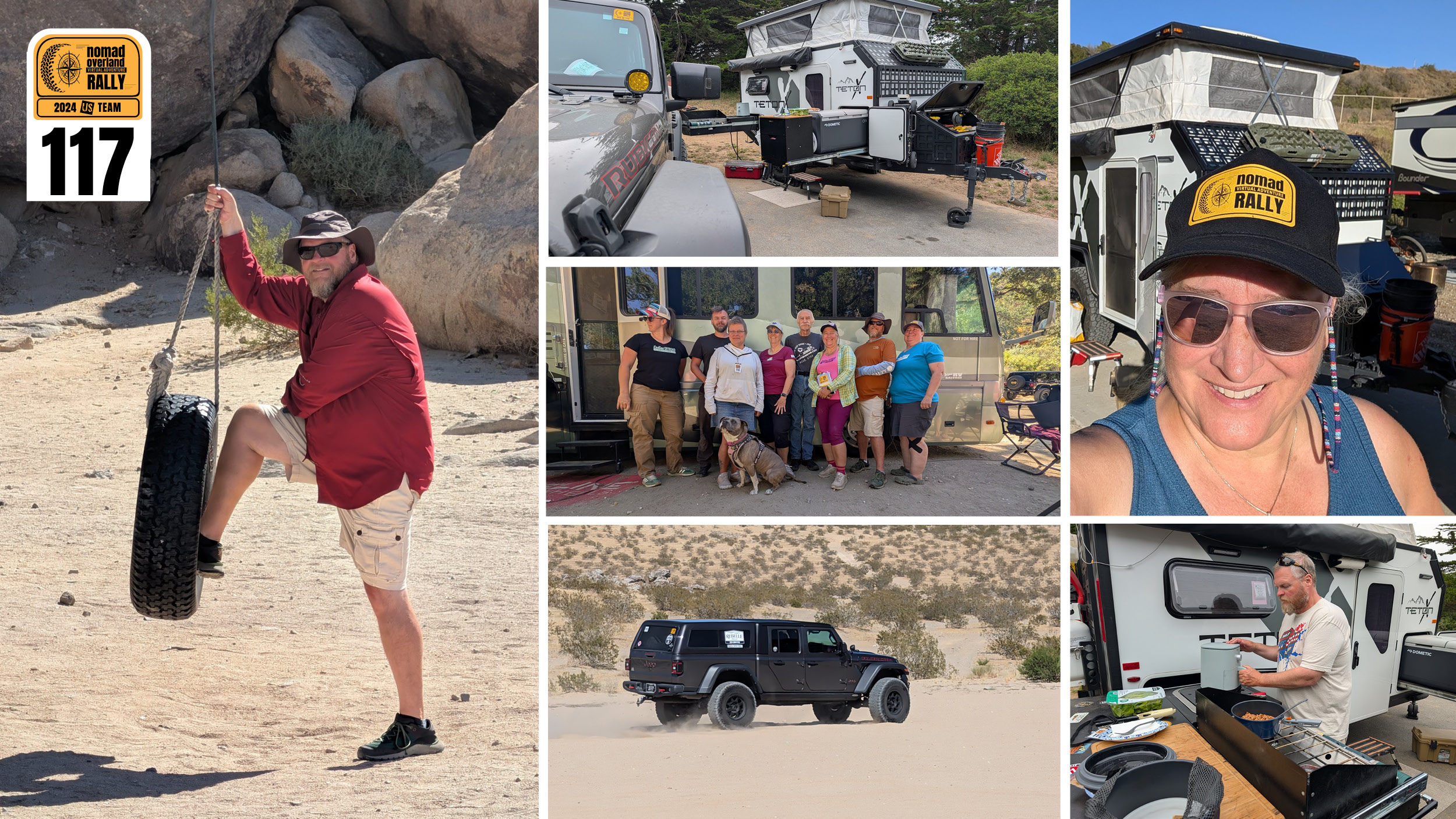
Team 117 Lucas did not waste a single second of daylight. Striking out on Day Two of the rally, Lisa and Jeff launched into an aggressive, multi-stage campaign across Arizona and California, masterfully stacking four complete Overland Stages and several driving challenges with as many PhotoQuests as they could find.

Stage One started from Mesa, Arizona, and carried them deep into California via the Morongo Basin, taking technical detours past the Integratron and the legendary monolithic boulder at Giant Rock, to knock off some of the driving tasks (they also found a very fun tire swing nearby). From the desert, they cut straight to the coast for a stark environmental pivot at Morro Strand State Beach for Stage Two. The amazing coastal views were mostly blocked by fog, and it was colder than expected. “There are A LOT of tents for being as cold and damp here as it is. We’ve been socked in since we arrived, but less than 5 miles from here, it’s bright, sunny, and warm… Gotta love coastal camping,” explained Lisa.

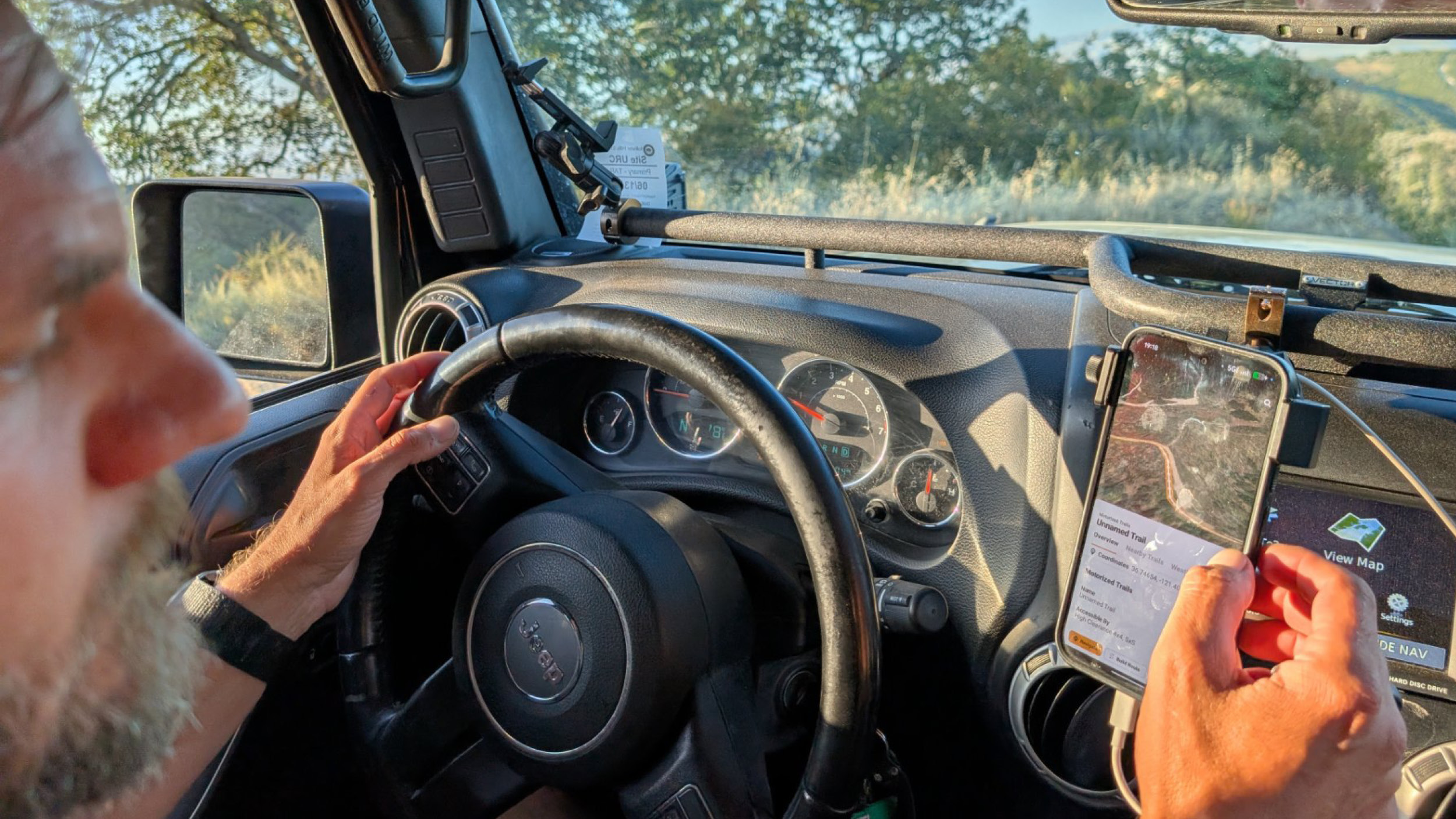
The Team turned inland for Stage Three, pushing north up the iconic Pacific Coast Highway and Route 101, navigating Cinema Road and Garner Flat Road as they headed to the Hollister Hills SVRA, where they rolled right into a massive Ladies Offroad Network (LON) event.

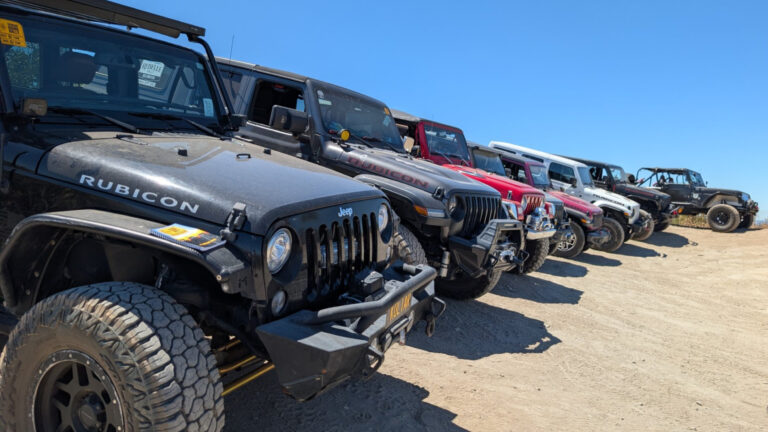
The backcountry has a funny way of shrinking; upon arrival, they discovered they were camping right next to Dariusz and Aga of Team 110 Smigiel, and there were a few other Nomad Teams attending the LON event, too. Lisa and Jeff joined Dariusz and Aga for a fun run up to the Hollister Overlook, with a handful of other Nomad. From the Overlook, the crews stood on the ridge tracking the literal plate tectonics of the San Andreas Fault splitting the landscape below.

Team 117 spent the rest of their time at Hollister checking out the Big Garner Springs Loop and West Trail before embarking on Stage Four toward Sunset Beach State Park. They wrapped up their stellar 1,000+ point week in first place on the leaderboard.

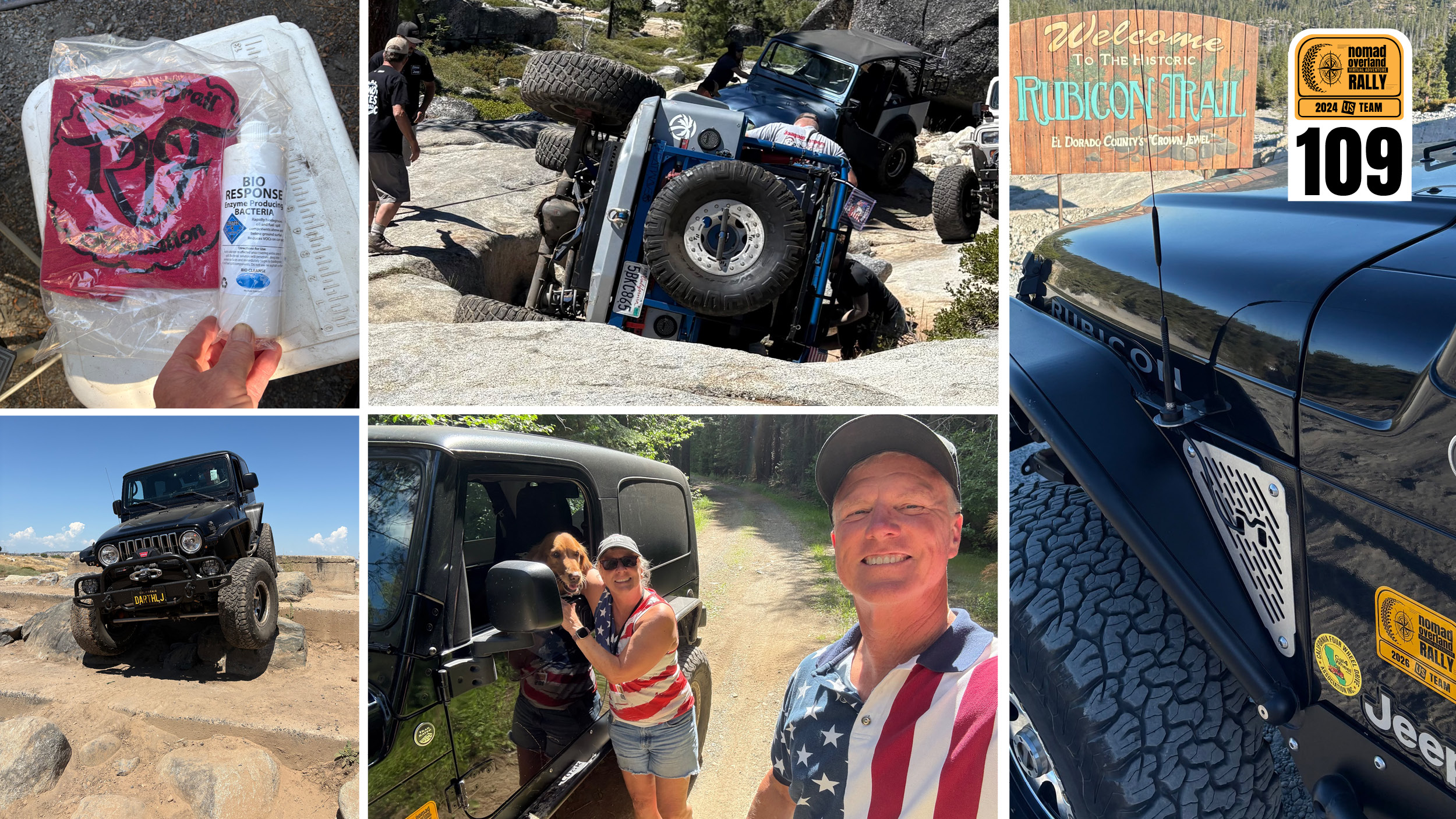
Team 109 Smith made their Nomad Rally debut with an impressive Week One. Mike and Diane didn’t look for any easy warm-up miles to kick off their Overland Stages. Instead, they pointed their rig, “Darth,” straight toward the granite crucible of the Sierra Nevadas to tackle the iconic Rubicon Trail for their first Stage, logging a masterclass in heavy technical wheeling and real-time trail safety. Starting out from the South Fork Campground in the El Dorado National Forest, Team 109 integrated their first Overland Stage into a Father’s Day tradition, marking their 9th year attending the Hi-Landers annual poker run. Navigating Ice House Road, Loon Lake, and the Wentworth Springs loops, the team used the sheer scale of the Sierras to sweep up high-value PhotoQuests.

They cleanly checked off the “Rock Bigger Than You” objective with a stunning piece of geological history: “A big rock on the Wentworth Springs leg of the Rubicon Trail. One of my favorite landmarks on this trail! No mountains nearby, it’s a “glacial erratic” deposited here by the glaciers that once covered the Sierras,” explained Mike.

The Rubicon is notorious for punishing the slightest lapse in focus, and the Smiths got a front-row seat to the trail’s true teeth. While stopping for photo ops at the infamous “Stair Steps,” they learned there had been a rollover at this obstacle earlier in the morning. Later on the Wentworth Springs leg, they encountered someone else having an “uh-oh moment” — a Jeep “flop” right at Big Rock. Mike and Diane immediately moved into a support role. Team 109 watched the technical flip recovery unfold, meticulously noting excellent trail safety discipline: “Flop recovery using two winches—one on the side and one on the rear. Note all bystanders cleared from the backlash zone.”

Thankfully, the driver and passenger were uninjured and the machine sustained minimal damage, but the incident provided a textbook example of real-world land stewardship. The fluid spill was instantly managed using a dedicated spill kit that the Rubicon Trail Foundation provides for organized runs. Mike noted, “This should be a “must carry” kit for wheeling in any sensitive area.”

For their Stage Two, the team began their transit back toward their home base in Vacaville, California, routing via Highway 50 and White Rock Road. But before closing out the tracking window, they made a brilliant strategic detour to the Prairie City SVRA to wrap up the week with some more trail fun. During their first two stages, they were able to pick off a rapid-fire stack of PhotoQuests and at the end of Week One, they had locked down a massive second-place debut on the leaderboard.

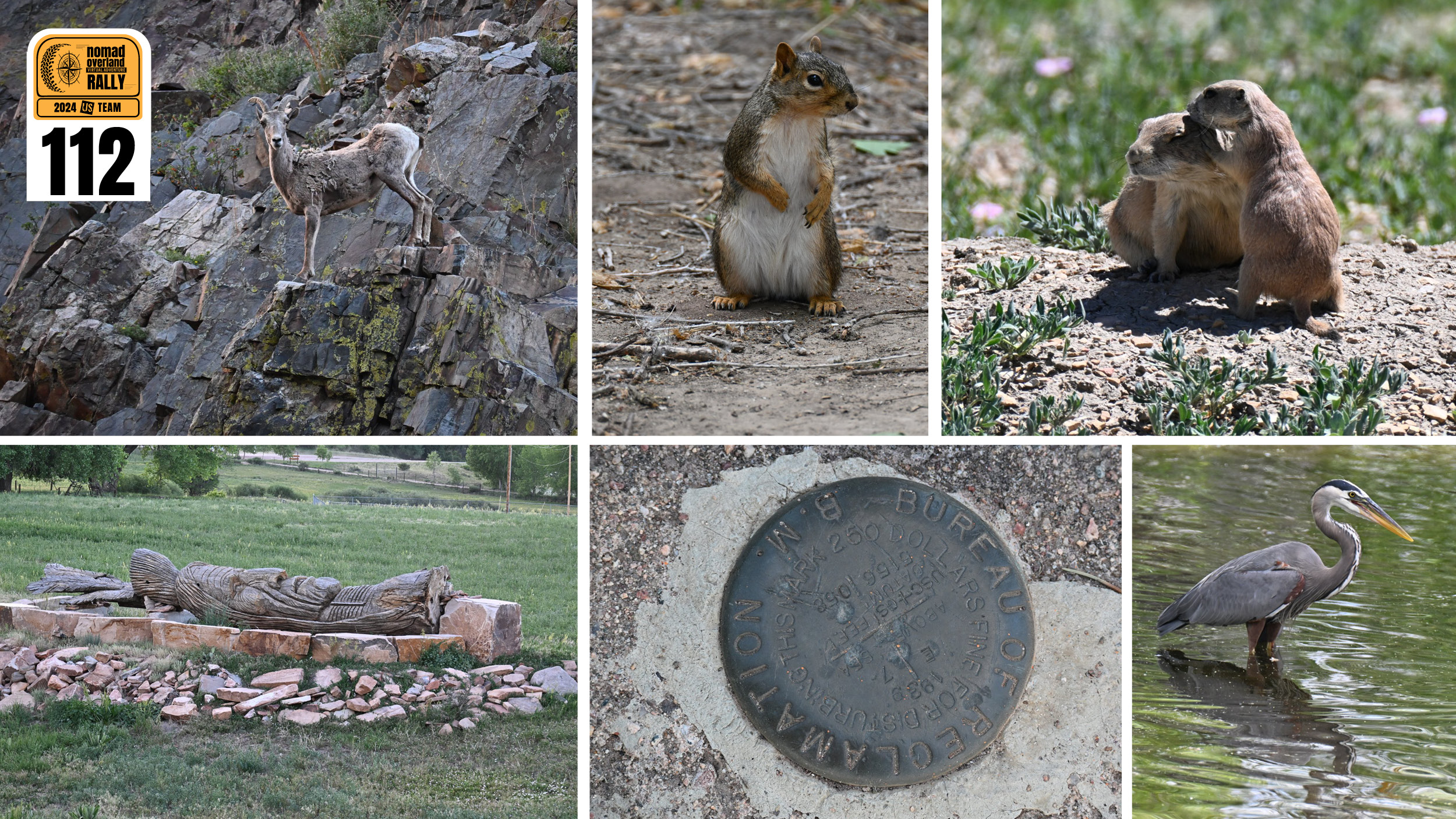
Team 112 Venrick started their Nomad Rally with a different strategy. While the top two teams were clocking massive transit miles across state lines, Dan and Tara proved that you don’t need to burn through tanks of fuel to break into the top slots on the leaderboard. Operating out of their home base in Loveland, Colorado, the Venricks unleashed a high-yield, local wildlife scouting strategy to tackle the notoriously difficult “wildlife” category of the PhotoQuest. And weren’t only looking for wildlife, they kept their eyes open and picked up a number of shots across other categories, too.

As they approached the dramatic granite walls of the Big Thompson Canyon, they stopped to grab a shot of a survey marker, then inside the canyon corridor they found a bighorn sheep scaling a sheer rock faces. From there, they routed toward the striking, jagged limestone spine of the Devil’s Backbone rock formation just west of Loveland. Nearby, they tracked down a deeply moving piece of public art history with a fascinating story—checking off the “Sculpture in a Wild Place.” Tara explained, “This is ‘Redman,’ one of Peter Wolf Toth’s famous sculptures from the Trail of the Whispering Giants. This monument stood by Loveland Lake for many years until time took its toll on the wood. He was moved out west of town when he became a potential fall hazard. Eventually, he had to be laid down into the peaceful resting position he is in now.”

On Day Four, Team 112 shifted their operations north to Fort Collins, striking out on foot for a steep hike along Coyote Ridge. The trail paid off instantly, landing them right in the middle of an active prairie dog town where they photographed the sentinels sitting watch on their mounds—including a rare, perfectly timed shot of a momma prairie dog and her pup. Back down toward West Loveland, they checked off both a massive bull elk and a local mule deer herd.

In a targeted search for the wildlife of the wetlands eco-system, the Venricks made a slow-rolling sweep of the River’s Edge Open Space in Loveland where they captured a breathtaking variety of animal activity: white pelicans, a solitary great blue heron, nesting geese, an osprey circling overhead, a hidden bullfrog, fish breaking the water’s surface, and a local fox squirrel.

By pulling maximum points out of a highly concentrated regional footprint, the Venricks proved that total landscape literacy can easily match the point-scoring power of a long-distance track, securing a solid 3rd-place finish in the first week of their rookie year.
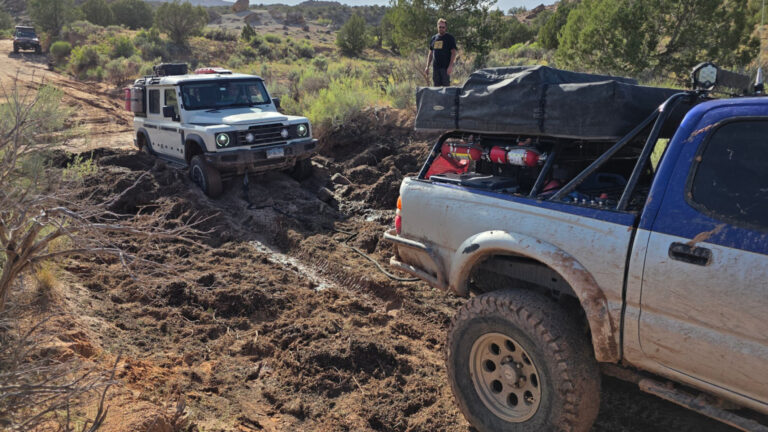
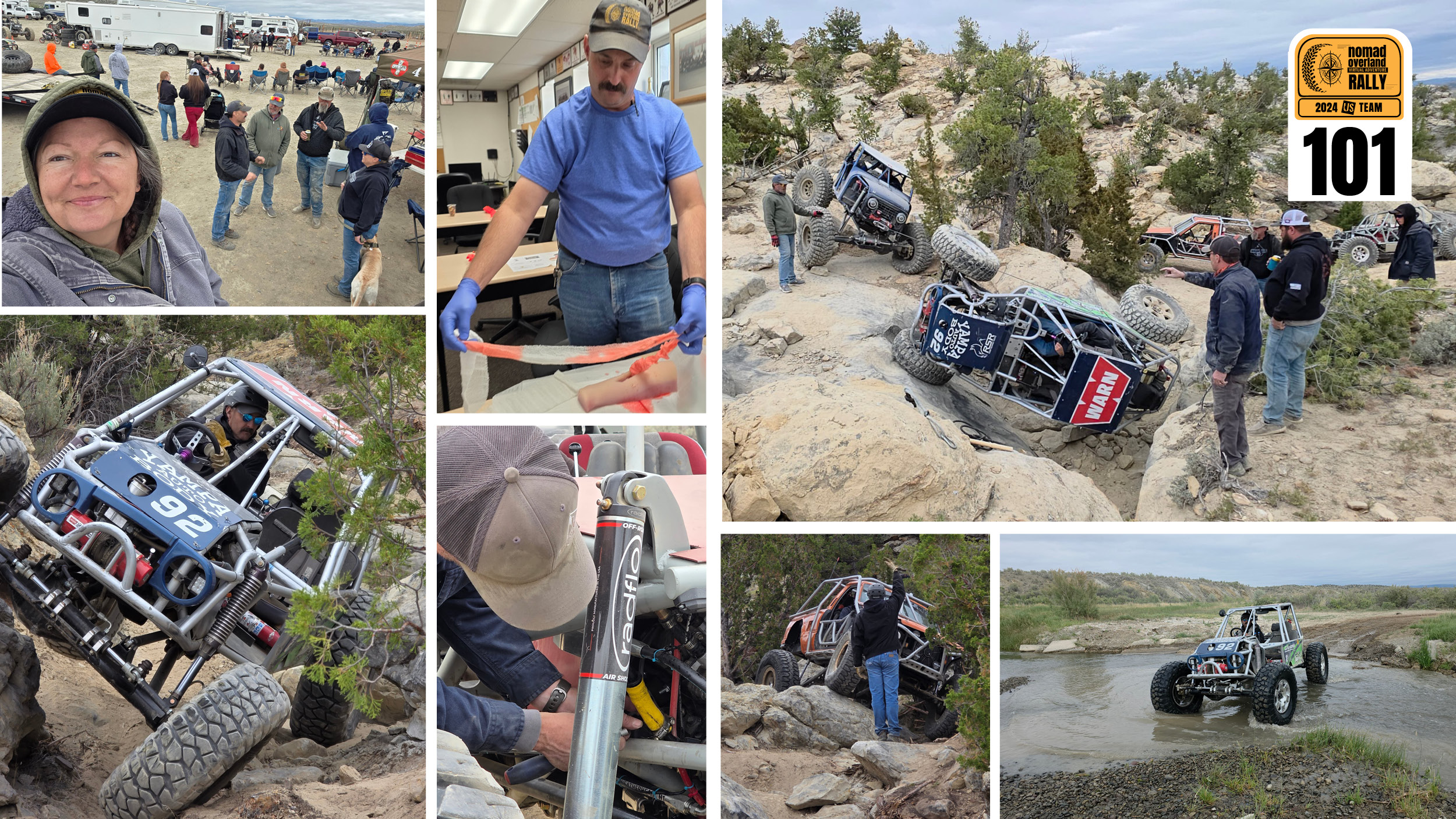
Team 101 Mercer went from Colorado to Wyoming this week to participate in a massive sponsored event: the 6th Annual Wagonhound Trail Runs, hosted by Central Wyoming 4×4. Tonya and Chris brought their high-clearance, custom-built buggy—affectionately named “Steve”—out to Wyoming for an absolute masterclass in heavy rock crawling, field repairs, and emergency readiness. The park in Thermopolis, Wyoming is a premier destination for hard-core rock rigs, and Team 101 wasted no time putting “Steve” through a battery of punishing driving activities, cleanly checking off a high-water crossing that showcased the radical engineering required for extreme terrain. “The buggy has such high water fording depth because the air intake and electric components are up higher than the tires are tall,” Tonya shared. “Truly, at 40 inches, your feet would get wet before the motor would.”

The rugged terrain of Wagonhound also served as the official maiden voyage for a friend’s brand-new buggy. Shaking down a fresh build on relentless rock trails is bound to expose minor mechanical bugs, and the crew had to execute a rapid-fire hydraulic steering line repair right there on the dirt. Thanks to a clever combination of tape, a silicone hose, and a few hose clamps, the hydraulic steering was quickly brought back into service without stalling the convoy.

But pushing the envelope on extreme rock lines means eventually finding the limit, and the team captured a textbook “Uh-Oh” moment on a technical transition that resulted in a partial flop. “While we were at the Wagonhound event we got the buggy into a spot that it didn’t transition out of as well as we might have liked,” the Team reported. “Luckily, we were wearing our 5-points and helmets, and no one was hurt. We got Steve back on his feet, and carried on. Thank goodness for WARN Industries winches!”

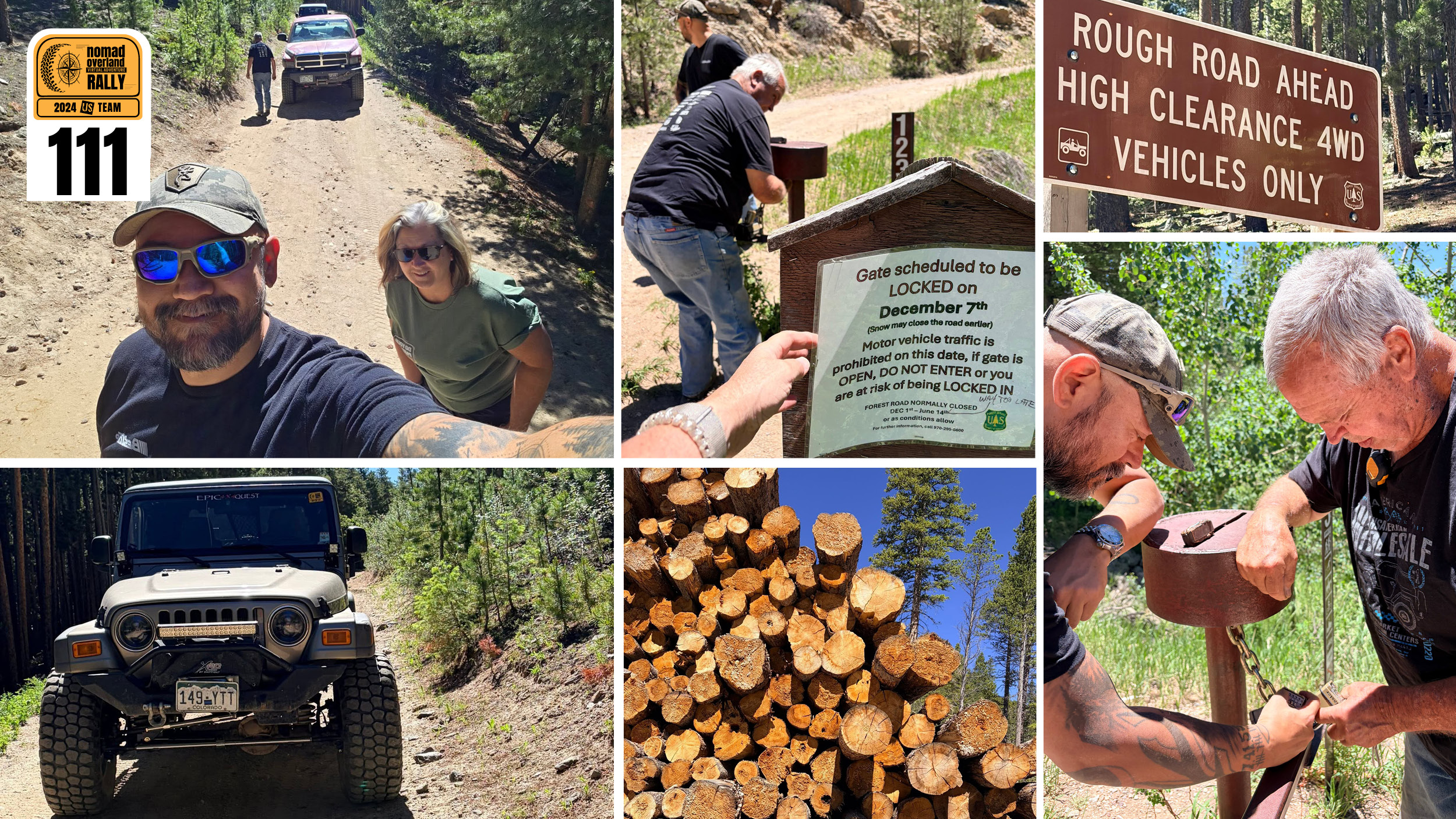
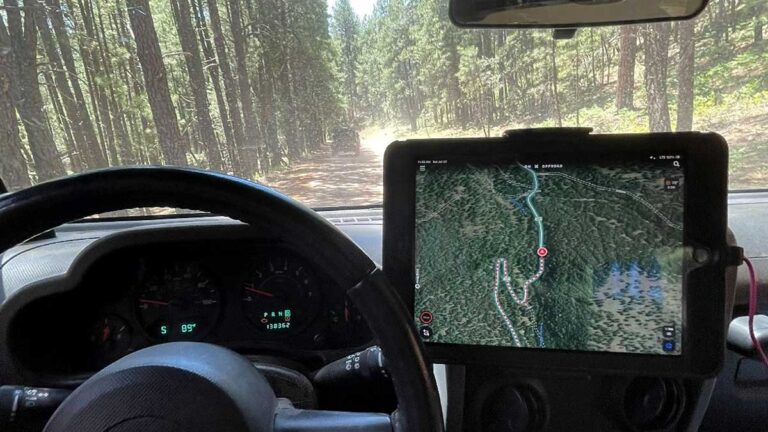
Team 111 Potter kicked off the opening week of the rally by partnering with the local community to physically unlock the backcountry, highlighting the importance of active land stewardship. Lisa joined with members of the Big Thompson 4×4 Club in their annual seasonal gate-opening operations in Colorado. Utilizing onX Offroad for precise navigation, the crew tackled a demanding trail system, successfully completing and logging three major trails: Pierson Park, Johnny Park, and Button Rock. Lisa and other club members had scouted these corridors a few weeks prior to the start of the rally to clear out major winter deadfall, so this week the mission was to officially unlock the seasonal gates. “We opened gates and made sure no additional trees came down as well as looking for trash,” Lisa noted. “Surprisingly, none to be found!”

And by the end of the first week, several other Nomad Teams were hitting the trails in Wisconsin, Virginia, North Carolina, Arizona, Pennsylvania, and Colorado. Others are still in the planning phases, preparing for extended Overland Stages in coming weeks. The race for points is just getting started. Check out the official Weekly Leaderboard to see how everyone ranked at the close of Week 1!

More News from the Rally

Check out all the articles and news from the 2026 Nomad Overland Rally in the News Archive

with